
What 1,000 SEAH-reported incidents tell us about safeguarding risks in the aid sector
After more than three years of reporting through the Harmonised Reporting Scheme (HRS) on sexual exploitation, abuse and harassment, CHS Alliance and participating organisations now have data on 1,000 reported incidents.
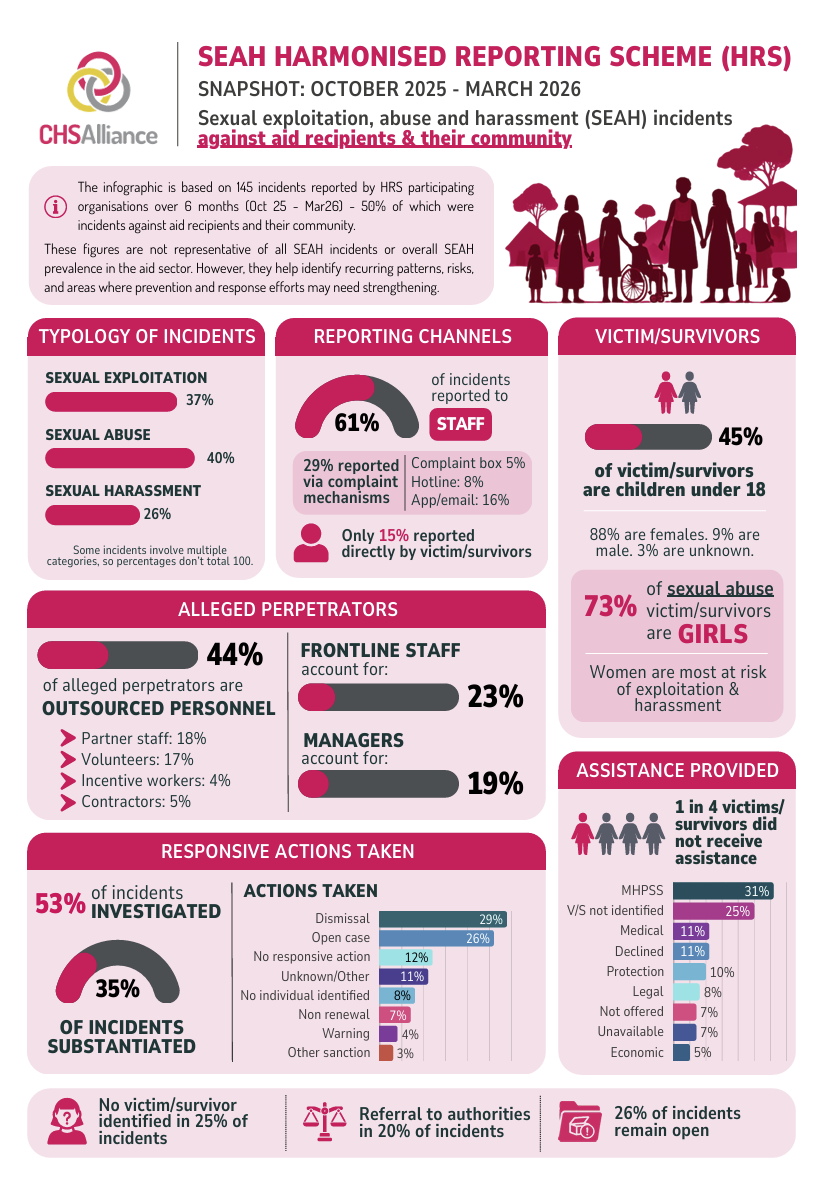 The latest HRS snapshot, covering October 2025 to March 2026, shows the same safeguarding risks continuing to emerge across the humanitarian and development sector and the need for urgent action.
Mathilde Belli, HRS Coordinator at CHS Alliance, says: “Over the last several decades, we’ve been navigating blind on SEAH, saying maybe we need to do more training or more awareness raising, because we didn’t have the data. Now we have the data, it shines a light on the main systemic issues. The statistics are shocking, but unfortunately not surprising.”
SEAH prevention is core to the CHS, as Tanya Wood, Executive Director of CHS Alliance, explains:
“SEAH is an egregious failure of accountability. That is why it sits at the heart of the CHS. It is not limited to one commitment. It is reflected across the whole Standard, from reporting and learning from communities to adapting programmes and strengthening organisational culture. CHS provides a holistic approach to support organisations, but shifting these trends will require a concerted, collective effort across the sector.”
What the data shows
1. The most vulnerable bear the brunt: children are most at risk
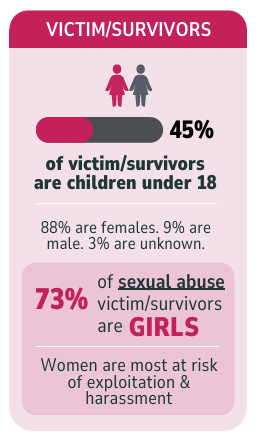
One of the clearest findings is the disproportionate impact of SEAH on children in incidents involving aid recipients and communities. In the latest snapshot, nearly half of identified victim/survivors in community-related incidents were children under 18. Girls were particularly affected, accounting for 73% of sexual abuse victim/survivors.
2. Reporting depends on trust, not only mechanisms
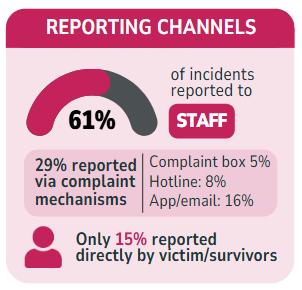
Only 15% of cases were reported to organisations directly by victim/survivors and the vast majority of disclosures are to people that are known and trusted. While formal reporting mechanisms are essential, they are not enough on their own. Organisations need to understand who communities trust and ensure those people know how to respond safely when disclosures are made.
3. Abuse of power in the workplace
Managers accounted for 45% of alleged perpetrators in incidents against staff or affiliated personnel. Incidents involving senior managers showed the highest rate of no responsive action and the lowest rate of dismissal.
Belli says: “We are seeing this same trend year on year. Organisations should treat management behaviour and team culture as safeguarding issues, and ensure confidential reporting pathways exist outside line management structures.”
4. Outsourcing Blindspot: contractors and partners pose high risk
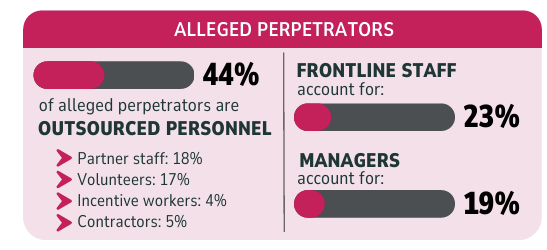
In community-related incidents, 44% of alleged perpetrators were outsourced personnel, including partner staff, volunteers and contractors.
As the sector increasingly relies on third parties, local partners, contractors and temporary personnel, organisations remain responsible for assistance delivered on their behalf. Far more needs to be done to ensure those involved understand the behaviour and consequences of any misconduct.
5. Weak investigations capacity
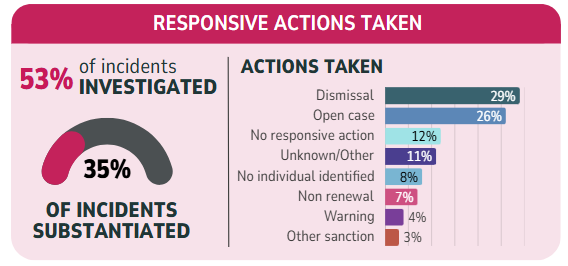
In both community-related and staff-related incidents, just over half of cases were investigated and 35% were substantiated. Low substantiation rates may reflect delayed reporting, weak evidence collection, fear of retaliation or limited investigation capacity.
6. Lower numbers do not necessarily signal fewer incidents
Since the funding cuts, there has been a decrease in reported incidents. But this does not necessarily signal improvement. In fact, it may be a greater cause for concern, argues Belli.
“Let’s be very clear: this drop in reporting is not a positive picture. It is a red flag we need to be very alarmed about. The reality is safeguarding functions are being cut: fewer trusted staff available to receive disclosures, less communication with communities about their right to report, and in some cases, reporting channels disappearing entirely. The concern is not that less harm is happening, it is that more victim/survivors may stay silent. If organisations continue to disinvest in safeguarding systems, we risk reversing years of progress, allowing more abuse to occur undetected and unaddressed.”
Where do we go from here?
The data serves as a warning: in an aid system where trust is already being challenged, the system itself creates more risks, unless we act together.
Yet, there are solutions. CHS Alliance is equipping organisations to transform this evidence into action through practical spaces, tools and sector-wide initiatives.
Organisations are encouraged to take practical steps:
- Meet the sector standards for PSEAH by conducting a CHS verification process.
- Enhance your capacity by connecting with CHS Alliance services such as the Harmonised Reporting Scheme, attending PSEAH trainings, strengthening investigation capacity and ensuring consistent disciplinary action regardless of seniority.
- Prevent the recruitment of perpetrators and their movement across the sector by joining the Misconduct Disclosure Scheme.
- Make safeguarding a core operational risk across all programmes and sectors, including child safeguarding, rather than treating it as a specialist or standalone issue.
- Train frontline staff and volunteers to safely receive disclosures and know how to refer victim/survivors, recognising that many people still report through trusted individuals rather than formal mechanisms.
- Strengthen trusted, survivor-centred reporting and referral pathways, analysing which channels communities actually use and feel safe using.
- Hold managers and leaders accountable as culture-setters by integrating safeguarding behaviour into performance reviews, promotion decisions and disciplinary processes.
- Get Support: refer to our practical resources, toolkits and guides, join our PSEAH Community of Practice and reach out to the team with any queries.
Belli comments: “Responding to SEAH is not just about disciplinary action; it is about the willingness to address structural issues, harmful attitudes and organisational cultures.
“We know what is happening, now we need to prioritise action. Safeguarding should be embedded in every organisation’s DNA.”
For any queries relating to PSEAH please get in contact at pseah@chsalliance.org.