
“Local organisations in DRC don’t need convincing about accountability: they need support and the space to lead”
Local humanitarian organisations in the Democratic Republic of Congo (DRC) possess deep knowledge of community-level action and an inherent commitment to humanitarian standards.
Yet crucially, frontline small and medium sized NGOs need the recognition, and support – to lead.
Earlier this year, CONAFOHD, a national network representing more than 500 NGOs in DRC, reached out via H2H network, to see if CHS Alliance and HQAI could support them in strengthening local organisations’ knowledge of standards and PSEAH, support CHS self-assessment and audit readiness, and build stronger pathways to recognition and leadership.
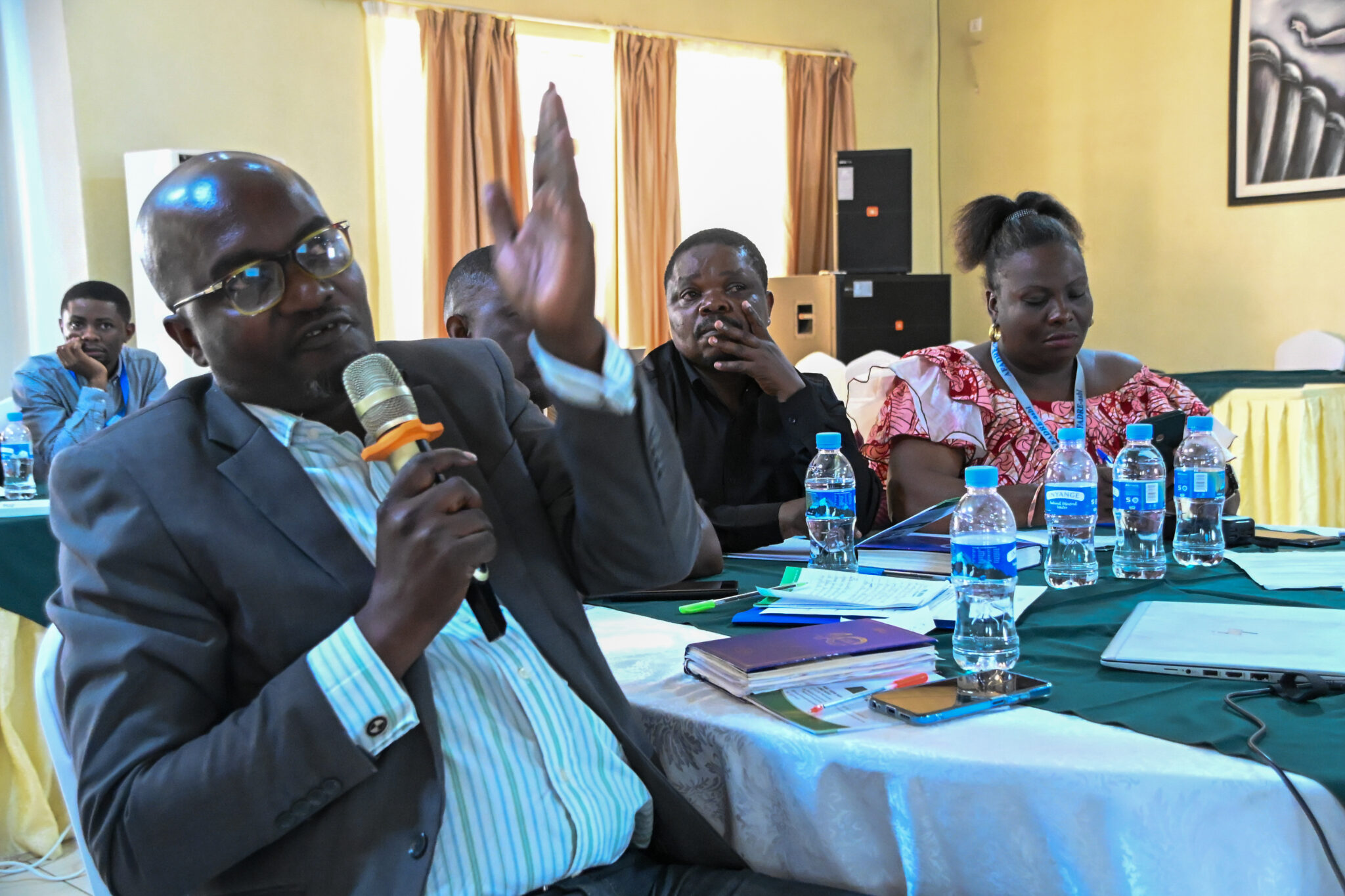
NGO leaders participate in CHS training in DRC
CHS Alliance staff recently visited DRC to deliver workshops and support sessions focused on the Core Humanitarian Standard (CHS), Sphere and how to bolster protection from sexual exploitation, abuse and harassment (PSEAH)
A palpable energy and commitment
As Méschac Nakanywenge, Coordinator of UPDDHE and a CHS Alliance member in DRC comments, “When you are verified against the CHS Alliance, your credibility increases significantly and trust grows.” He continues:
“People understand that you are not an organisation that has just appeared today without any experience. This means more opportunities.”
Bona Sokpoh, staff member of CHS Alliance, who led the CHS sessions reflects: “There was a lot of enthusiasm and application and willingness. During the workshop itself, we saw a high level of active participation, learning and sharing,” he says.
Existing systems of accountability
Many organisations in DRC are already applying the CHS commitments in practice, community engagement practices amongst organisations were already strong.
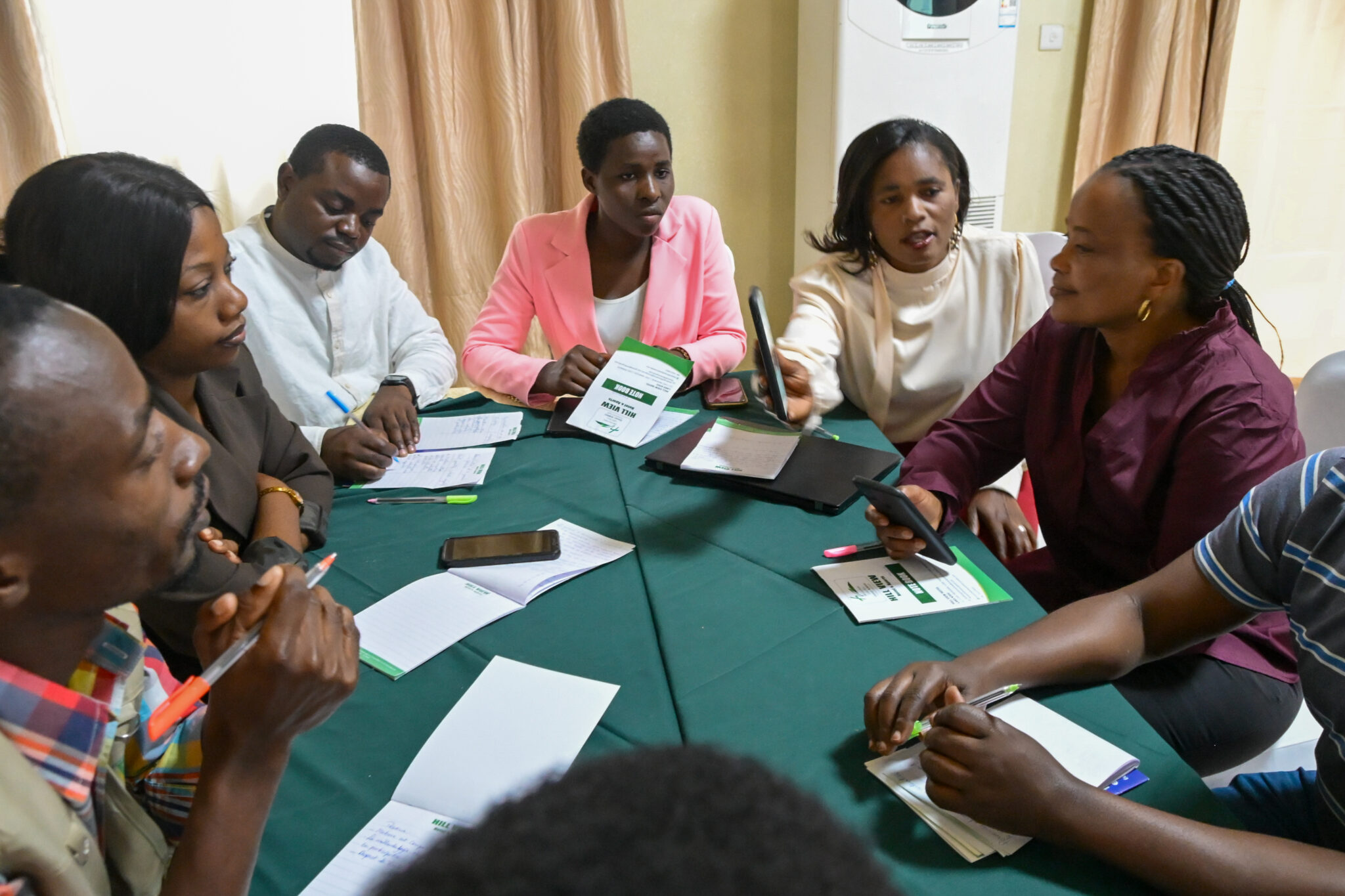
Participants discuss existing accountability practices and areas of improvement
“The way participants are engaging with communities is great, and it’s an essential part of the CHS” says Bona.
During the training, organisations explored more about how the CHS is put into practice, on areas such as participation, feedback, complaints, PSEAH, governance and organisational learning through interactive and lively exercises and group discussions.
Participants reflected on the prevalence of sexual abuse within the Congolese region, their role in preventing and responding to SEAH and how core PSEAH was to the CHS.
Solidarity within DRC
Méschac reflects on the solidarity amongst NGOs who are actively working together, many through the CHS Country Cooperative programme, to create a collective, learn and collaborate. He comments:
“When we talk about a cooperative, we understand cooperation, exchange of experiences, sharing tools and sharing opportunities,” he explained. “Nobody is strong in everything.”
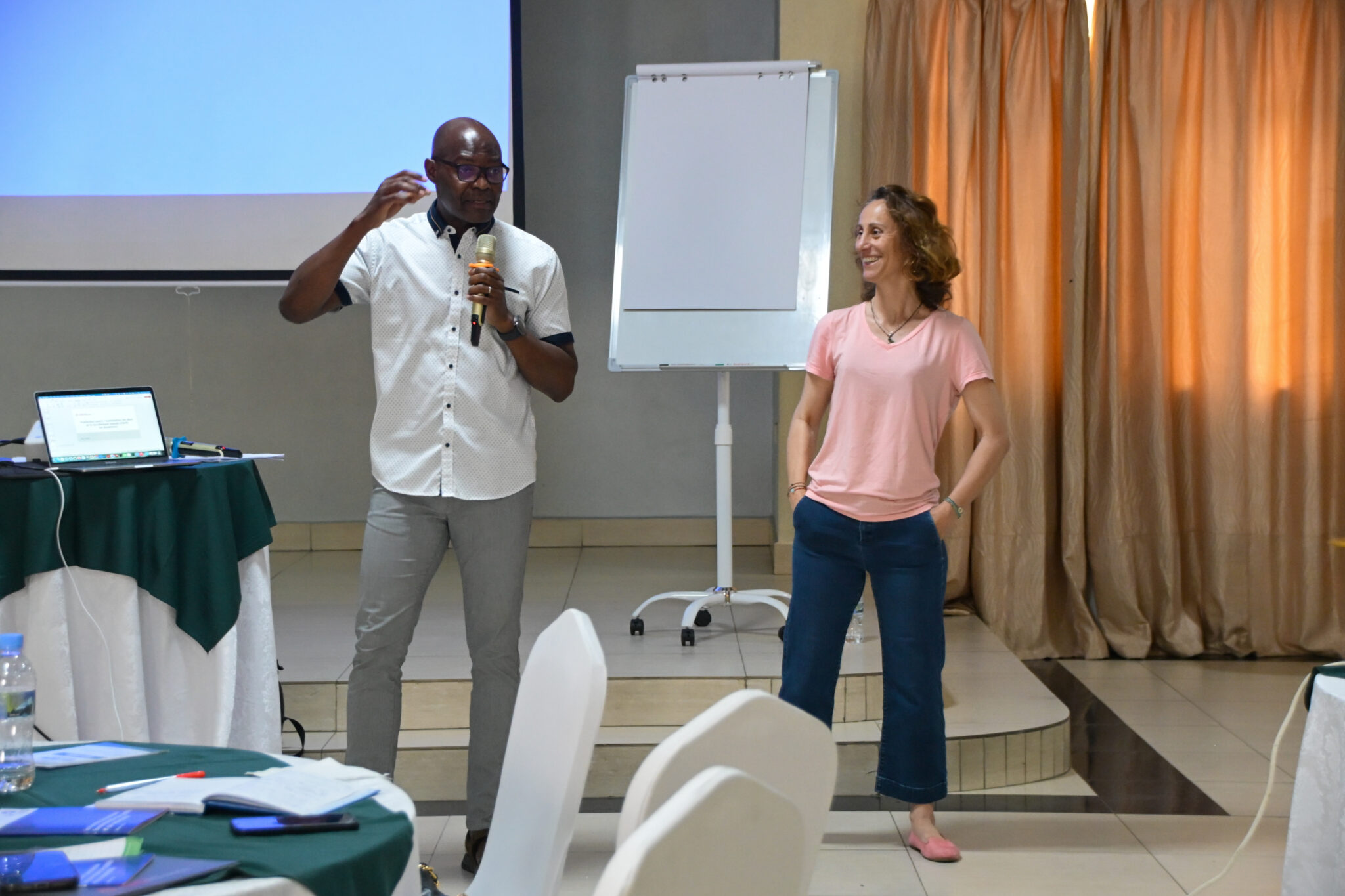
Bonaventure Sokpoh and Coline Rapneau from CHS Alliance lead the training
Recognition is key – but only with adequate support
Several participating organisations are now moving forward with CHS self-assessments, CHS audit-readiness and are becoming members of the Alliance, with a growing interest to continue peer learning, capacity sharing and advocacy through the CHS Country Cooperatives and beyond.
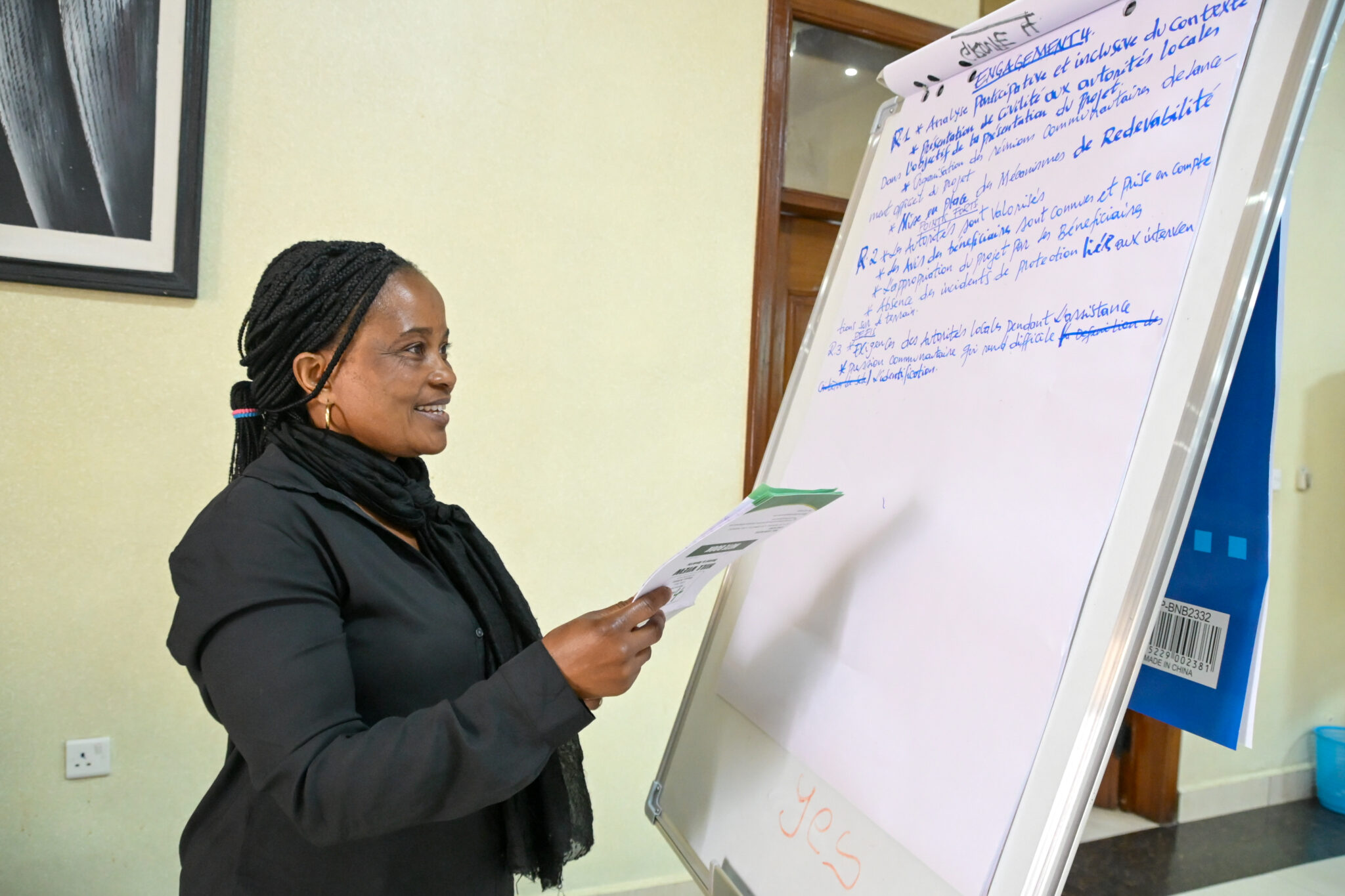
Participant works through engagement practices for effective accountability
For Méschac, the Alliance represents more than a standards framework – it is also a route towards stronger participation in the wider humanitarian system. He says:
“CHS Alliance is both a professionalisation tool, a strategic lever, and a gateway into the international humanitarian system.”
The project is the beginning of a longer-term process of strengthening locally led humanitarian action across DRC.
Yet commitment and recognition alone are insufficient. Local NGOs frequently operate in fragile financial positions, surviving on irregular project funding.
True localisation cannot mean only granting local actors the space to lead when resources are absent, to achieve sustainable, locally led humanitarian action, the wider sector must recognise capacity already there and support with the needed consistent funding, system support, and access to recognition mechanisms. As Bona says:
“When given the space to lead, but no resource, NGOs like those we met, are essentially, set up to fail. We must ensure that as organisations go through the improvement process, we support their journey”
Get involved in the CHS Alliance
Whether your organisation is exploring the CHS for the first time, interested in CHS verification, or looking to connect with peers through a CHS Country Cooperative, there are multiple ways to engage with the CHS Alliance community.
Get in touch with the team (info@chsalliance.org), or find out more about our CHS Country Cooperatives, explore CHS membership, verification and taking action on PSEAH can support your accountability journey.