
Beyond the funding cliff: How Bangladeshi NGO CODEC turned a crisis into deeper community accountability
When the news broke of a major funding cut at the beginning of January 2025, the shockwaves at CODEC (Community Development Centre in Bangladesh) were immediate. In an instant, four to five major projects evaporated.
The “challenging time” of the past year not only demonstrated the vulnerability of over-reliance on a handful of major funders, it also served as a catalyst to reflect on how CODEC could protect and strengthen accountability to communities in an increasingly difficult aid environment.
What followed was a fundamental rethink on how to build a robust, proactive culture of self-assessment and radical accountability.
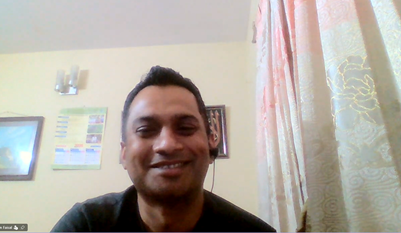
Faisal Golam from CODEC
From crisis to turning point
As Faisal Golam, Deputy Assistant Director – HRM & Administration at CODEC noted, “We wanted to be clear that our organisation is serving communities well. We want to work in a transparent and compliant way and be able to demonstrate this.”
As a member of the CHS Alliance, CODEC chose to undertake the CHS Alliance self-assessment , a verification process designed to help organisations measure and strengthen accountability to communities and staff. For CODEC, the process provided an opportunity not only to identify gaps, but to demonstrate a proactive commitment to continuous improvement.
Faisal says “We conducted the CHS Self Assessment Surveys in Cox’s Bazaar, Chittagong, and Dhaka, within Rohingya and host communities, and within 6 other communities. With 5,200 staff and volunteers across Bangladesh, I was adamant, I wanted to reach 1,500 people.”
But despite best efforts, only 450 responses came in. “This was not enough to show the true impact or gaps in our work. We had to go further” says Faisal.
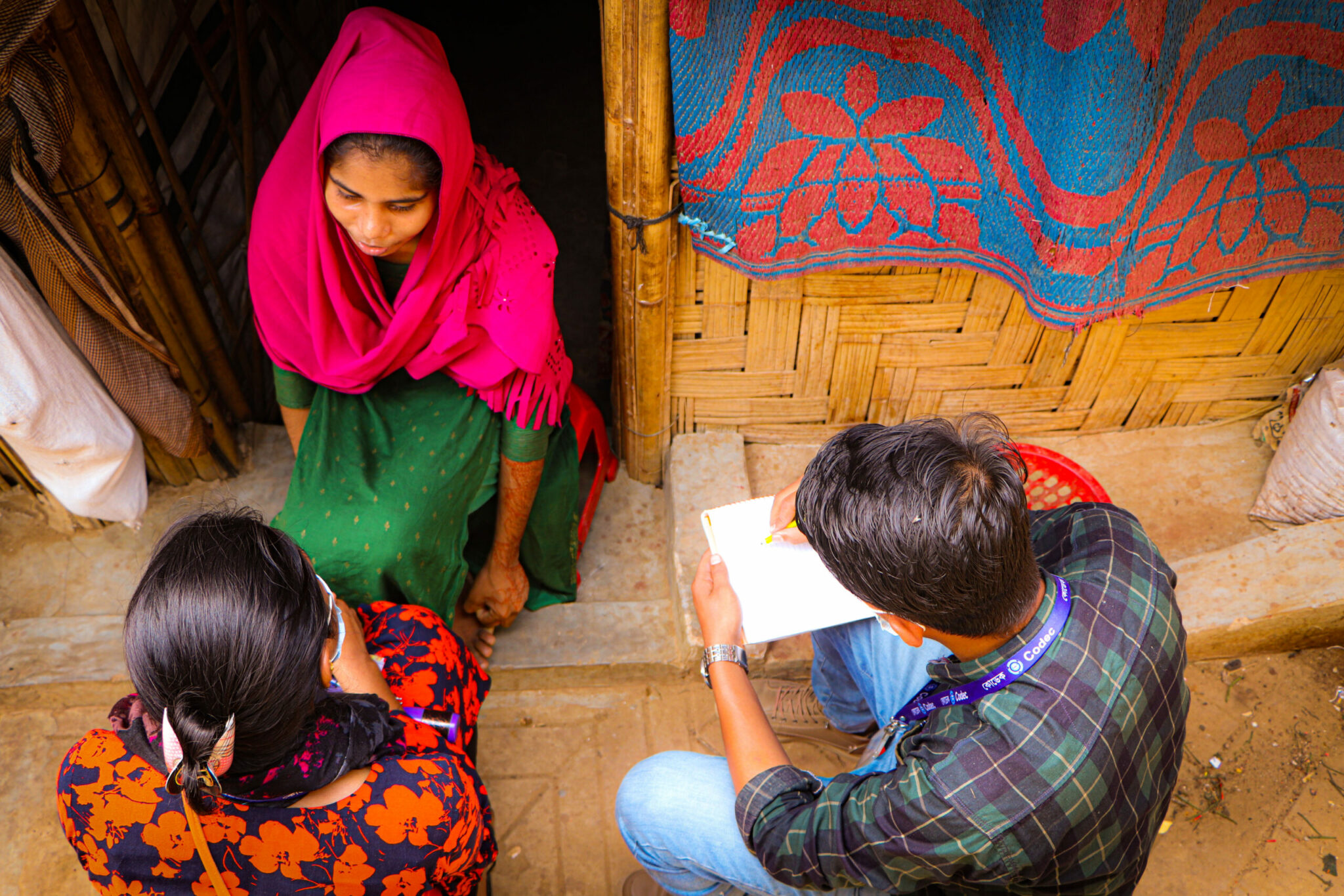
CODEC staff engaging with families in Bangladesh
Being honest about barriers to participation
It became clear that it was linguistic and physical barriers preventing true participation.
“We switched it up – developed survey hubs within the camps – downloading and physically handing them out. Most of our volunteers were Rohingya, so we translated it into Rohingya and then the English survey into Bangla. We discussed the survey with them before they started and encouraged them to share their opinions. If we weren’t hearing from the people on the front-line, why were we doing this?”
For CODEC, meaningful accountability depended on ensuring that frontline staff and volunteers – including Rohingya volunteers – could participate safely and in their own language.
The approach worked – feedback flooded in and for the first time CODEC had a true picture of what was working, and what needed to change.
The process flagged up some core issues: problems with reporting channels, concerns on staff wellbeing and importantly, some worries regarding security – some staff didn’t feel safe.
“Whatever they share is good for the organisation.”
“We knew these issues were there but for the first time we had data and a clear sense of the issue. We do other assessments, but this was different, this time the staff felt this was a safe, trusted way to share results” Faisal says.
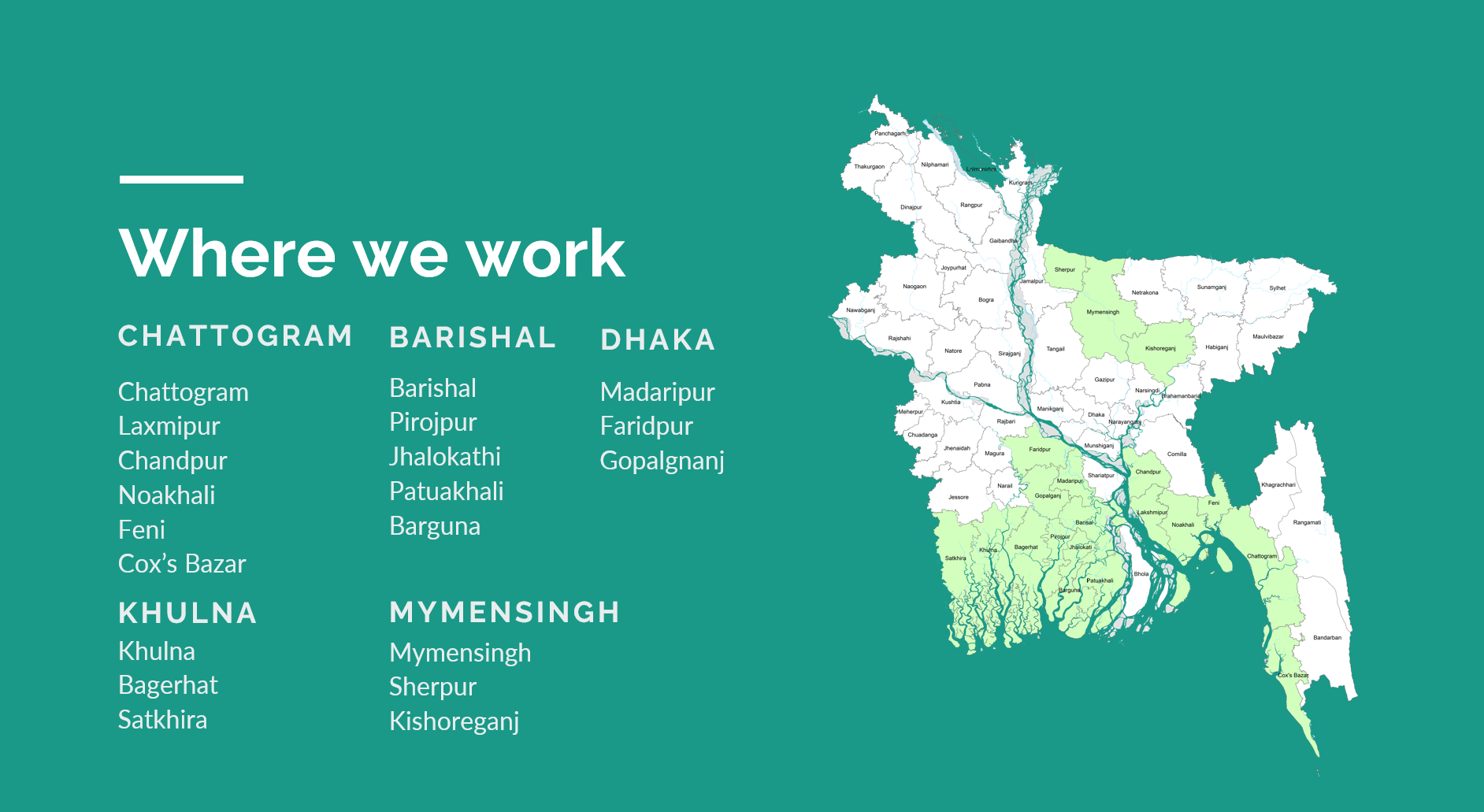
Map of CODEC’s working area in Bangladesh
For CODEC, the value of the self-assessment was not simply identifying gaps, but creating a trusted process through which staff and volunteers felt heard. In a difficult funding climate, the organisation saw this as essential to maintaining accountability to communities.
After CHS self assessment was completed, Faisal shared those the results during a partner monitoring visit:
“They seemed to receive it positively that we had taken this decision independently and with a proactive nature,” he says
The improvement plan and process is now underway, “We sat with the department heads and set target areas across the nine CHS commitments. We just finished and we are already seeing changes. I am confident it will improve us in the areas we are lacking and help to move forward as an organisation.”
The key change – giving ‘invisible’ volunteers a voice.
The most compelling part for Faisal has been finally hearing from volunteers themselves. Faisal says “Volunteers so often do not have any spaces to raise their voices or make sure their problems are heard by someone. They are invisible.
We can now say: “Your voice has been heard by someone and that’s why we’re doing this. Your voice is in the improvement plan”. This is huge, and important. Our staff and volunteers are a big part of our work – they are at the frontline, we want to hear their issues, complaints, as well as what is working well. We are shortly sharing the results with them”.
Contract renewal
During the same period in which CODEC was independently undertaking its CHS self-assessment and implementing organisational improvements as part of its own commitment to accountability and learning, the organisation also continued its partnerships with existing institutional donors through the renewal of their ongoing project agreements.
For Faisal, this reinforced an important lesson for NGOs facing similar pressures: investing in accountability to communities is not separate from organisational resilience – it is part of it.
His advice for fellow NGO workers: “Everyone is having the same issues at the moment with funding and it’s a challenging environment.
“It is important to demonstrate- and to be confident as an organisation, that we can say to communities – “this is how we serve you, we are doing our best, we want to know how we can do better.”
Could CHS self assessment be right for your organisation? Find out more about CHS verification and get in touch with our team at verification@chsalliance.org with any questions or concerns.