Humanitarian Accountability Report 2026: Accountability under pressure
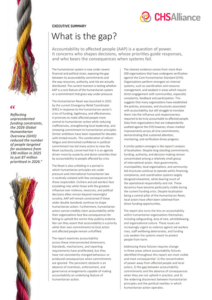
The Humanitarian Accountability Report (HAR) 2026 examines the state of accountability in the aid system at a moment of unprecedented financial and political strain. Drawing on data from more than 200 organisations verified against the Core Humanitarian Standard (CHS), system-wide studies, and contributions from people with lived experience of crisis alongside practitioners across the sector, it asks whether accountability to people affected by crisis is a core feature of the humanitarian system, or a commitment that gives way under pressure.
Subtitled The gap between commitments and compromise, the report finds that:
- Accountability to affected people is fundamentally a question of power: who shapes decisions, whose priorities guide responses, and who bears the consequences when systems fail.
- Standards, mechanisms and reporting requirements have proliferated, but they have not consistently changed behaviour or produced consequences when commitments are ignored.
- Organisations that measure their performance against the CHS over time do become more accountable, making the biggest gains in the hardest areas. Yet the largest humanitarian players have still not verified against this collective framework.
- The current funding crisis is exposing long-standing weaknesses, with community engagement and safeguarding among the first functions cut.
The report sets out three levers for change: shift structural power closer to people and institutions affected by crisis; make accountability commitments enforceable; and re-anchor accountability in humanitarian norms and political honesty.
Read the full report, with all findings, evidence and contributor voices.
Short on time? The executive summary covers the headline findings and the three levers for change.