
“Self-Assessment Helped Us Truly Listen to Children”: EDUCO’s CHS Self Assessment Journey
María Perarnau, Humanitarian Donors and Emergency Response Advisor at EDUCO, speaks to CHS Alliance about her experiences with CHS self-assessment, how it has helped reflect on efficacy of programmes and helped hear from the very people the organization works with – children – in a new way.
by Sarah Baldwin and Tanner Piscatelli
Long-term CHS Alliance member EDUCO has recently completed their first ever self-assessment, after starting the process in 2024. A medium sized NGO with a wide reach, EDUCO is based in Spain and operates in 18 countries within Asia, Central America, and the Sahel region of Africa, supporting children’s education, wellbeing in emergencies and providing lifesaving protection and education during crises. Their work is supported by major donors such as DG ECHO, UNICEF and Education Cannot Wait. They are also part of the Child Fund Alliance, reaching more than 70 countries and have been an active member of CHS Alliance for many years.
CHSA: Thanks for talking with us today Maria. First of all, tell me, why did you decide to go forward with self-assessment?
“It’s a challenging time, as we all know. We knew self assessment would be a really good learning experience, but there is also no way to overstate how important it is for donor due diligence. We partner with DG ECHO, UNICEF and others such as Education Cannot Wait and there is fierce competition for funds. Donors are increasingly looking for verification against the CHS in their due diligence process.
The process enabled us to test EDUCO against CHS benchmarks to get a true picture how person-centred our work is, and how we could improve.”
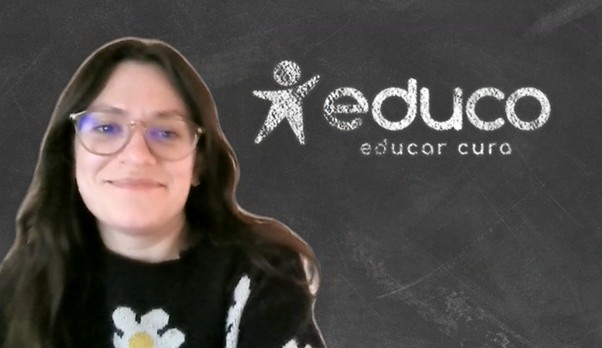
María Perarnau, Humanitarian Donors and Emergency Response Advisor at EDUCO
CHSA: You started this in 2024, what did the process involve, and how did it differ from your previous experience, leading this for a singular organisation?
“We decided to involve 3 countries in the self assessment, one in the Americas, one in Africa, and one in Asia. This was in order to ensure we had a clear picture of our work across the board, and tried to understand the rich diversity of experience of our participants. It was a very different experience to when I was leading it at SOS CVI Ukraine, for one country. The data is more complex, and the logistics shouldn’t be underestimated- organising surveys across a large range of local partners and programmes was not simple, but it provided a well-rounded view of EDUCO’s work which was invaluable.
CHSA: What did you discover through the process?
“It was encouraging to see how much progress we’ve made, and that we have strong tools and policies in place. At the same time, it became clear that these didn’t always translate seamlessly to the country context. The gap at the country level stood out. We quickly realised that the priority wasn’t creating more polished policies, but rather investing additional time and resources in communication, ensuring that the materials actually reach and support the people who need them.
We were especially keen to hear from children themselves, and spent a considerable time adapting the surveys, resources and means of engagement. This was a considerable effort, but well worth it. We heard from children in a new way we haven’t before, which was exactly what we had hoped for.
There were no major surprises in how EDUCO was graded. The assessment largely reflected what was already known, but the process did provide was clearer evidence and insight into the specific areas that need additional attention and improvement.
CHSA: What were some specific areas of improvement?
Systemising knowledge. As is the case in many organisations, knowledge can be lost between countries and the head office, and as staff and projects change. This is something we are now paying more attention to. And Commitment 5 – handling of complaints – was flagged. We have already started worked cross-organisation on this and are noticing some improvements.
CHSA: Talk us through how staff reacted and what the coming months hold?
“The staff have welcomed the process: it was refreshing to have an independent benchmark and the surveys covered such a large scope. The indicators were related to specific departments, which made it targeted, and manageable. We’ve managed to improve for example, a bottleneck in emergency response. It’s good to see how quickly changes can be put into place – we flagged the issue, dealt with it.
CHSA: What would you recommend to other organisations embarking on the self—assessment process?
“First of all, if the organization works with children, it is vital you adapt the process to work with them – they are often left out. Believe me, the results are worth the extra effort. I would then say, allow enough time for planning and working well with partners in the field and country offices. Relationships are key.
The process in the beginning can be frightening, but to start and familiarise yourself with the process. Finally, I would say, make use of the Alliance, the team, especially Lola was invaluable and they are more than happy to help and support.
CHSA: What comes next?
Work on the improvement plan continues, which will support the DG ECHO’s certification that is coming next year. Now that the self-assessment is finished, we would love to consider new forms of resources to support other verification options, such as independent verification, so watch this space!
To find out more about self assessment and Verification options please take a look at our Verification page
Have a story of verification? We’d love to hear from you. Please get in touch with sbaldwin@chslliance.org